
Chair or floor for daily japa
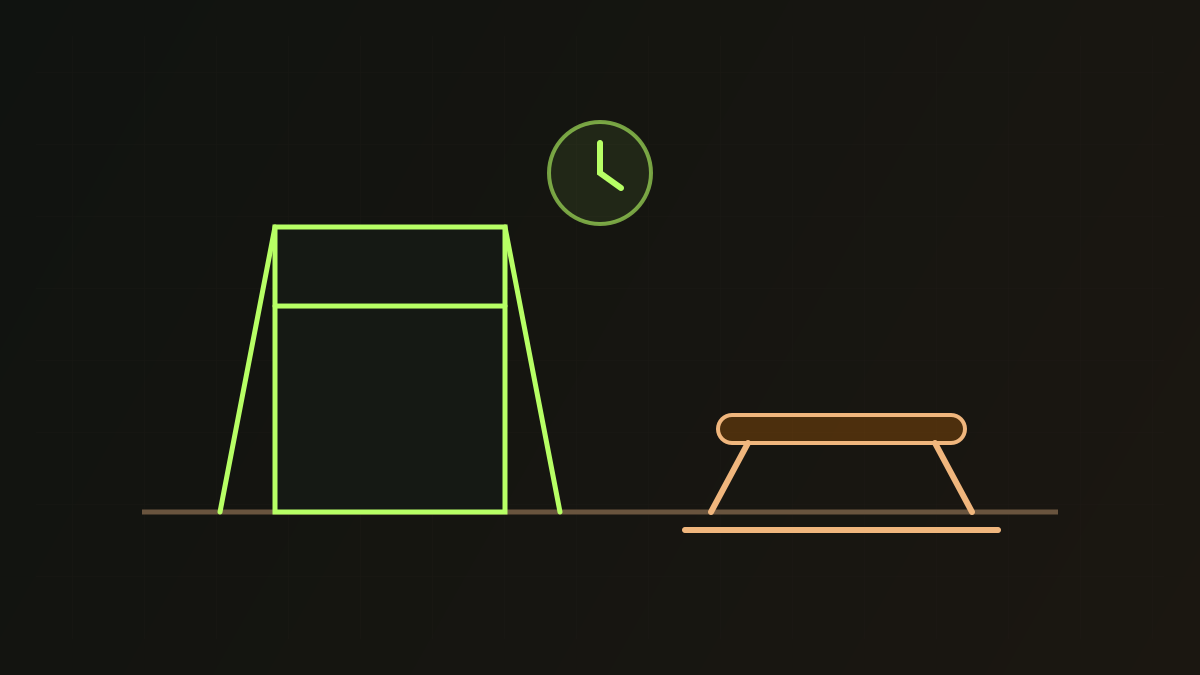
People treat the floor as the serious option and the chair as a concession. For some bodies, on some tiles, in some decades of life, the chair is how the practice survives. The recitation does not become worldly because your feet are not folded.
This is a comparison for daily japa, not a yoga class. If a doctor, a physiotherapist, or a teacher who knows your knees has already told you to sit up, listen to them. What follows is for people who have been postponing a mala until they can sit like a picture.
What the sitting is for
You need a seat that lets the mouth and the hands do their job for the length of the practice. Stillness helps. Pain does not. A posture you can only hold by bracing is a countdown to fidgeting, then to stopping.
How to use a japa mala asked for a straight-enough back, not a performance. Straight-enough is easier to find on a chair for many people over forty, for anyone with a replaced knee, for anyone sitting on cold marble in January.
The floor can be wonderful: stable, slightly formal, a clear difference from the rest of the day. It can also be a theatre of cushions that takes longer to arrange than the mala. If you spend the sitting managing your feet, the feet have become the practice.
Floor: when it helps, when it does not
The floor helps when you can get down and up without a story, when the surface is not punishing, and when the household will leave you that patch for ten or twenty minutes.
A folded blanket under the hips often does more than ambition. Raising the hips lets the knees drop. If the knees still shout at five minutes, you do not have a floor practice. You have a negotiation.
Apartments fight the floor: hard tile, downstairs neighbours who hear every shift, a living room that is also the corridor. A practice corner in a small home should be a place you will actually use. A beautiful floor layout you abandon on workdays is decoration.
Getting up with a child in one arm is a real constraint. So is vertigo. So is a pregnancy. So is a hip that has already had its say. None of these is a lack of faith.
Chair: how to sit so it is still a sitting
Use a chair that is not also the laptop chair if you can. Mixing work and japa in the same slouch is how both get the same mind.
Sit toward the front of the seat. Both feet on the floor. A straight-enough back, not a throne and not a sofa collapse. Rest the mala in the hands as you would on the floor. You are not less present because there is wood under you.
A sofa is usually too soft. The body melts; the count gets vague; sleep arrives if it is evening. If the sofa is the only seat, perch rather than recline, and keep the sitting short.
On a commute you will sit however the bus allows. That does not rewrite the home default. It does prove that japa can happen without a perfect asana.
Pain is information, not a teacher
A little stiffness at the start can warm. Sharp pain, pins and needles, a knee that swells later — these are information. End the sitting. Change the seat. You do not owe the mala your cartilage.
People then do an unhelpful bargain: they sit through pain as proof, miss three days while the knee calms down, decide they are inconsistent. A chair would have been cheaper.
If you lose the count because the body is shouting, that is not a mystery. What to do when you lose the count includes fatigue and posture. Sit in a way that lets attention have a chance.
Households, temples, and two seats
If the family puja is on the floor and you can join without harm, join. Shared recitation has its own support. If you cannot, sit on a chair at the side without a speech. Elders who already use a chair have already solved this. You are allowed to be among them.
A temple may have its own expectation. Follow the room when you are a guest, as far as your body allows. Daily practice at home is not a temple reconstruction.
You may also split: floor on a spacious morning, chair on a worknight. Split only after one default exists. Morning versus evening is enough of a choice without adding a daily debate about the ground.
A default for thirty days
Pick one seat for the usual sitting. Write it as plainly as a seam: the wooden chair after tea, blanket on the floor after the lamp.
If in the first week the body refuses, change the seat, not the mantra. Choosing one mantra and staying with it is already enough ambition. The chair or the floor is furniture.
At the end of the month, keep the seat that made return ordinary. Photographs of other people's spines can wait. Your knees live with you. Let them vote. Then say the name.
FAQ
Is japa on a chair less valid than sitting on the floor?
No. A sitting you can repeat on a chair is stronger than a floor posture you resent or cannot hold. The recitation is the practice, not the photograph.
My knees hurt after ten minutes on the floor. What should I do?
Use a chair, or sit on the floor with support under the hips, or shorten the sitting. Pain that you endure as proof is not devotion. It is a way to stop next week.
What if the household expects the floor?
Follow the household when you are with them if you can do it without harm. For a private daily sitting, choose the seat that lets you return tomorrow.